
Thinking about moving to an Orange County beachfront home? It’s an exciting opportunity, but preparing for it takes more than just packing boxes. Living by the coast comes with unique perks and challenges. You’ll need to budget for premium property costs, understand the competitive real estate market, and prepare for the natural elements that come with beachfront living. Planning every detail helps you avoid surprises later. With the help of movers in Orange County, your move can be smooth and efficient. Ready to dive into the details? Let’s break down exactly how to prepare for this life-changing move.
Budgeting for Coastal Living
Buying a beachfront property in Orange County means preparing for high costs. The average price of a beachfront home here can range from $2 million to over $10 million, depending on location and size. On top of that, homeowners association (HOA) fees can range between $200 and $1,000 monthly, covering community amenities and maintenance. Property taxes in Orange County hover around 0.73% of the assessed value, so for a $3 million home, expect to pay roughly $21,900 annually. Insurance premiums also climb due to coastal risks. A standard homeowners policy may cost between $2,000 and $5,000 annually, but adding flood insurance—which is often necessary—could push that total to $7,000 or more. Planning your budget carefully helps prevent surprises. Moving services in Orange County CA recommend working with a financial advisor to map out all these expenses before making a commitment.

Understanding the Local Real Estate Market
The Orange County beachfront housing market is highly competitive. Properties in prime areas like Newport Beach or Laguna Beach often sell within weeks, sometimes above the asking price. In 2024, the median price for coastal homes has seen a 7% increase compared to the previous year. Buyers face bidding wars, especially for homes with direct beach access. Understanding market dynamics is essential. Monitoring listings for at least six months before purchasing can help you recognize fair pricing and spot potential deals. Mortgage rates are another factor. As of now, rates hover around 6.5% for 30-year fixed loans, which significantly impacts your monthly payments on a multi-million-dollar property. Local movers in Orange County remind you that securing a home quickly is key in such a fast-moving market.
Selecting the Right Neighborhood
Orange County’s coastline offers diverse neighborhoods, each with its charm. Laguna Beach is known for its artsy, laid-back atmosphere, while Newport Beach appeals to luxury buyers with its high-end amenities and exclusive communities. Huntington Beach, “Surf City USA,” attracts those wanting a vibrant surfing culture. When choosing a neighborhood, consider not just the lifestyle but also practical factors like proximity to work, schools, and shopping centers. Beach erosion and flood zones are also critical to check since they can affect property values and insurance costs. Movers in Orange County CA suggest visiting potential neighborhoods during different times of the day to get a feel for traffic, noise levels, and community activities.
Preparing for Natural Elements
Beachfront homes face constant exposure to humidity, salt air, and potential coastal erosion. Salt-laden air can corrode metal fixtures, while high humidity promotes mold growth. Home maintenance costs for beachfront properties can be 20% higher than inland homes due to these issues. Investing in weather-resistant materials, such as stainless steel fixtures and marine-grade paint, helps combat these elements. Windows and doors should be hurricane-rated, even if hurricanes are rare, to protect against coastal storms. Regular maintenance like pressure washing and sealing wood surfaces is crucial. Orange County residential movers highlight that before moving in, scheduling inspections for structural integrity, roof condition, and existing moisture damage is a smart move.

Securing Appropriate Insurance
Insurance for beachfront homes is complex. Standard homeowners insurance often excludes flood damage, making a separate flood policy necessary. In Orange County, flood insurance premiums can range from $1,200 to $4,000 annually, depending on the property’s elevation and proximity to water. Earthquake coverage is another consideration since Southern California is seismically active. A typical earthquake insurance policy can cost 0.5% to 1% of your home’s replacement value. Combining all these policies could mean spending over $10,000 annually on insurance alone. Last minute movers in Orange County point out that it’s critical to consult with insurance experts who specialize in coastal properties to ensure you’re fully covered.
Planning for Moving Logistics
Moving to a beachfront home comes with logistical challenges. Many coastal areas have narrow streets, limited parking, and strict moving regulations. Some communities may restrict large moving trucks during peak hours or require special permits. Coordinating these details ahead of time is essential. Elevators in beachfront condos may also need to be reserved for moving day, often incurring additional fees. Hire packing services in Orange County CA to secure valuable items since fragile belongings like glassware, artwork, and electronics need extra protection against vibrations and humidity during transit.
Embracing the Beach Lifestyle
Life at the beach offers endless recreational activities, from surfing to beach volleyball, but it also demands certain lifestyle adjustments. Sand will find its way into your home, so investing in outdoor showers and mudrooms helps manage the mess. Furniture choices also shift—opt for materials like wicker and teak that withstand humidity and salt air. Local communities often host events like beach cleanups and surf competitions, providing opportunities to connect with neighbors. Furniture movers in Orange County suggest arranging your new space to blend indoor and outdoor living, with open layouts that highlight ocean views and provide easy access to patios and decks.

Considering Climate and Weather
Orange County enjoys a Mediterranean climate, with average summer highs around 80°F and winter lows dipping to the mid-50s. However, coastal fog, known as “June Gloom,” can bring overcast mornings that last into the afternoon during early summer months. Salt air and moisture demand constant vigilance—HVAC systems need regular maintenance to prevent corrosion, and dehumidifiers can help manage indoor moisture. Power outages can occur during storms or heatwaves, so having a backup generator is advisable. Loading and unloading movers in Orange County emphasize that moving during off-peak seasons, like fall or winter, can make the process smoother and less expensive due to lower demand.
Evaluating Commute and Accessibility
Moving to an Orange County beachfront home offers incredible views, but commuting can be challenging. Coastal traffic is notorious, especially during weekends and holidays when tourists flock to the beach. Depending on your neighborhood, commutes to inland business hubs like Irvine or Santa Ana can stretch from 20 minutes to over an hour during peak traffic. Public transportation options are limited along the coast, so having a reliable car is essential. Parking can also be scarce in beachfront communities, prompting many homeowners to invest in private garages or permits. Plan your moving day around low-traffic times to avoid delays.
Understanding Local Regulations and Permits
Beachfront homes are subject to stringent regulations, especially regarding construction and environmental protections. Any renovations that impact the coastline, such as adding decks or seawalls, require Coastal Commission approval. Permitting fees vary but can range from $2,000 to $10,000, depending on the scope of the project. Some communities enforce view ordinances, which limit the height and placement of structures to preserve ocean views for neighbors. Landscaping regulations may also restrict certain plant types to prevent erosion. Familiarizing yourself with these rules helps avoid fines and project delays. Secure necessary permits for moving day to prevent issues with local authorities.
Designing Your Dream Beachfront Home
Customizing your Orange County beachfront home isn’t just about aesthetics—it’s about creating a space that embraces the coastal environment while ensuring functionality and durability. Designing a home by the ocean comes with unique challenges and opportunities, especially when it comes to maximizing views, protecting against the elements, and blending indoor and outdoor living. Every decision, from the materials you choose to the layout of your spaces, plays a role in creating a home that not only looks stunning but stands up to beachside living.

Optimizing Views and Natural Light
The ocean view is one of the most valuable about moving to an Orange County beachfront home. Start by considering the orientation of your living spaces. Positioning living rooms, dining areas, and master bedrooms to face the water ensures you can enjoy those views throughout the day. Floor-to-ceiling windows or sliding glass doors can open up rooms and provide uninterrupted sightlines to the ocean. Opting for low-profile or frameless windows enhances this effect. Reflective surfaces, such as mirrored backsplashes or glossy finishes, can help bounce natural light deeper into the home, making spaces feel larger and brighter. Skylights are another great addition, especially in areas that don’t face the ocean directly, like hallways or bathrooms, bringing in more sunlight and reducing the need for artificial lighting.
Window placement isn’t just about the view—it’s also about ventilation. Casement or awning windows, which can be opened even during light rain, help capture sea breezes and promote natural airflow, reducing reliance on air conditioning. When choosing window treatments, lightweight fabrics or motorized shades offer flexibility in controlling light while maintaining those ocean views.
Incorporating Coastal-Friendly Materials
Living by the beach means your home will face constant exposure to salt air, moisture, and intense sun, all of which can take a toll on standard building materials. Choosing coastal-friendly materials helps ensure longevity and reduces maintenance costs over time. For outdoor spaces like decks and balconies, composite decking is a smart choice. It resists warping, cracking, and fading, all common issues in beachfront environments. Stainless steel, particularly marine-grade 316 stainless, is ideal for fixtures and railings as it resists corrosion caused by salt air.

For interiors, flooring options like porcelain tile or natural stone are durable and easy to clean, making them perfect for high-traffic areas where sand and moisture are common. In kitchens and bathrooms, quartz countertops offer a non-porous surface that resists staining and moisture damage better than natural stone options like marble. Exterior siding also plays a crucial role—fiber cement siding is both durable and resistant to salt damage, while still offering a range of design options to match your aesthetic.
Creating Indoor-Outdoor Living Spaces
One of the best parts of moving to an Orange County beachfront home is the seamless connection between indoor and outdoor spaces. Creating fluid transitions enhances your living experience and makes the most of the beachfront location. Installing large sliding or folding glass doors between living areas and outdoor decks allows for wide openings that blend the two spaces together. Covered patios with retractable awnings or pergolas provide shade and make outdoor areas usable throughout the day. Outdoor kitchens are a popular feature in beachfront homes, perfect for entertaining while enjoying ocean views. Stainless steel appliances designed for outdoor use withstand the salty air, while stone or concrete countertops offer durability. Incorporating features like built-in grills, refrigerators, and sinks makes outdoor cooking convenient.
Furniture choices for outdoor spaces should focus on durability and comfort. Materials like teak, aluminum, and synthetic wicker resist moisture and sun damage, while performance fabrics repel water and resist fading. Adding cozy elements like outdoor rugs, cushions, and fire pits can make these spaces feel like an extension of your home, perfect for gatherings or quiet evenings by the sea.
Designing Functional Storage for Beach Living
Beachfront living comes with its own set of storage challenges. From surfboards and kayaks to sandy beach towels and wet gear, having designated spaces for these items keeps your home organized and clean. Mudrooms located near entrances are ideal for managing beach gear. Outfitting them with hooks for towels and wetsuits, shelves for shoes, and built-in benches with storage underneath provides a practical solution.
For water sports enthusiasts, installing built-in surfboard racks in garages or outdoor sheds keeps boards off the ground and protected from the elements. Climate-controlled storage areas inside the home are perfect for sensitive items like electronics, artwork, or musical instruments that could be affected by humidity.
Personalizing Outdoor Landscapes
The landscape around your beachfront home should complement the natural beauty of the ocean while being resilient to the coastal environment. Native, drought-resistant plants like succulents, beach grasses, and coastal sagebrush require less water and thrive in sandy, salty conditions. These plants also help prevent soil erosion, which can be a concern for beachfront properties.
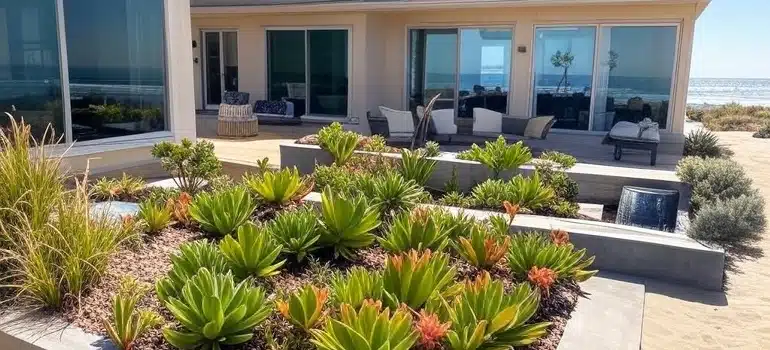
Incorporating outdoor features enhances both functionality and aesthetics. An outdoor shower near the entrance helps rinse off sand before heading indoors, reducing the mess. Fire pits or fireplaces create cozy gathering spaces for cooler evenings, while pergolas and shaded lounges offer relief from the sun during the day. Lighting also plays a key role—pathway lights, string lights, and subtle uplighting on trees or architectural features create a welcoming ambiance at night.
Final Thoughts on Moving to an Orange County Beachfront Home
Moving to an Orange County beachfront home demands careful planning and attention to detail. Budgeting for high property costs, HOA fees, and increased insurance is essential. Understanding the competitive real estate market helps secure the right home. Preparing for natural elements like salt air and humidity protects your investment. Insurance coverage should include flood and earthquake policies. Thoughtful home design maximizes views, blends indoor-outdoor spaces, and uses coastal-friendly materials. Prioritize functional storage and durable landscaping. With the right preparation, moving to an Orange County beachfront home becomes a seamless transition into the coastal lifestyle.