
Orange County boat owners know that moving a vessel across town or to a new home isn’t as simple as hooking up the trailer and driving off. Between the busy streets of Costa Mesa, the tight curves of Laguna Beach, and the bustling marinas of Newport, planning every detail matters. That’s why all experienced movers in Orange County advise people to think several steps ahead, especially when their prized boat is on the line. Taking the time to follow essential prep steps not only keeps the vessel safe but also saves money, stress, and potential legal headaches. So, what exactly should boat owners in OC focus on when moving their boats? Let’s break it down step by step.
How Should You Inspect And Document Your Boat’s Condition Before Moving In Orange County?
Professional movers in Newport Beach recommend that every boat owner perform a complete inspection before the move. Orange County roads are unpredictable. Between sudden stops on MacArthur Boulevard and the winding lanes of Newport Coast, your boat can suffer damage even if secured properly. That’s why checking your boat’s condition is not optional. Inspect the hull carefully. Pay attention to the keel, bow, and stern where impact risks are highest. Use a flashlight to look for cracks, chipped gelcoat, or soft spots in the fiberglass. Check the propellers, trim tabs, and outboard mounts. Any unnoticed flaw can get worse during a rough move.
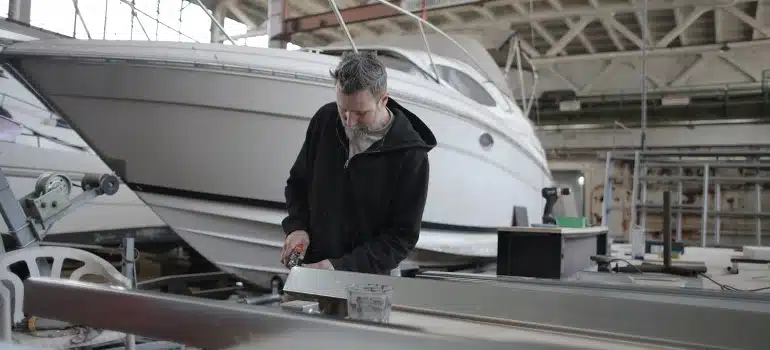
Next, walk through the interior. Inspect every hatch, locker, and cabin wall. Tighten anything that seems loose. Take photos and videos from different angles. Document seats, electronics, the steering system, and any custom upgrades. Upload these files to a cloud drive. This protects you if damage happens during boat moving in OC and you need proof for your insurance. For vessels valued over $75,000, consider hiring a certified marine surveyor. They charge around $500 in Orange County. Their report gives you legal protection in case of post-move disputes. Spending a few hours on documentation can save you thousands later.
Why Is It Crucial To Clean And Dry The Boat To Meet Local Regulations?
Experienced movers in Huntington Beach report that OC marinas have zero tolerance for dirty boats. Huntington Harbour, Dana Point, and Newport Dunes enforce strict environmental laws. They expect every incoming vessel to be clean and dry. Failing to meet these standards can get you fined up to $5,000. That’s why cleaning your boat thoroughly is not about aesthetics. It’s about legal compliance and protecting your investment.
Start by draining the bilges, live wells, and all onboard tanks. Do it at least 24 hours before the move. Use absorbent pads to soak up moisture and prevent mildew during transport. If your boat has an onboard toilet, pump it out at an authorized station. In OC, that service runs about $20. Scrub the hull. Remove barnacles, algae, and marine debris. Professional hull cleaning in OC averages $5 per foot. For a 30-foot boat, that’s around $150. Skipping this step could double your fees when the receiving marina demands emergency cleaning. Plus, marine growth adds weight. Extra pounds can increase your towing fuel costs by $50 to $100 on a trip across the county.
What Gear Should You Remove And Secure Before The Move?
Talk to moving services in Orange County CA and they will tell you that loose items inside your boat become dangerous during transport. OC roads like PCH or the 405 are rough and windy. Even the best-secured boats shake and rattle during a move. Anything not bolted down can fly, break, or cause injuries. Remove all fishing rods, coolers, life jackets, and personal belongings. Store them inside your vehicle or secure them tightly in waterproof bins.
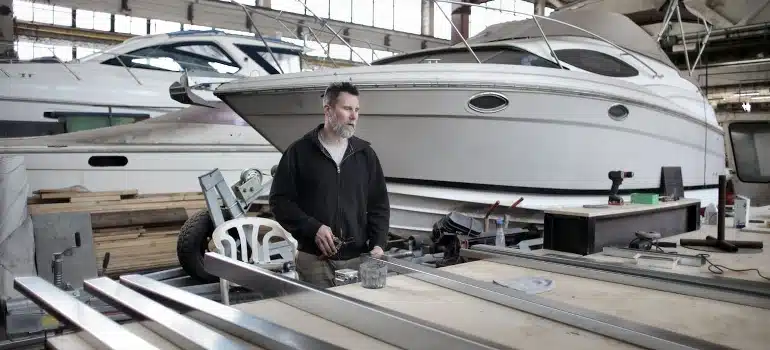
Electronics are especially vulnerable. GPS units, stereo systems, and fish finders should be removed. Wrap them in bubble wrap and store them safely. Replacing a $2,000 chartplotter is painful if it breaks during the move. For fixed items like canopies, antennas, or radar domes, fold them down or detach them entirely. Secure remaining parts with heavy-duty straps rated for 1,500 pounds. These cost around $30 at local OC marine supply stores. Double-check doors, windows, and hatches. Use duct tape or marine-grade tape to keep them closed. An unsecured hatch blowing open on the freeway can cost you hundreds in repairs—or worse, cause a traffic accident.
How Can You Protect Your Boat With Local-Grade Covers Or Shrink-Wrap?
All local movers in Orange County will tell you to use professional-grade covers or shrink-wrap to protect your boat from OC’s harsh elements. The Southern California sun is brutal. It bakes fiberglass, warps vinyl, and fades paint quickly. Combine that with road dust from freeways like the 5 or 55, and you have a recipe for expensive damage. Shrink-wrapping your boat is the safest bet. Expect to pay $20 to $30 per linear foot in OC. Covering a 30-foot vessel costs about $600 to $900.
DIY covers are cheaper but come with risks. A decent marine-rated UV cover will run you $300 to $500. Make sure it fits snugly. Loose covers flap in the wind, scratching your gelcoat and chipping paint. Use ratchet straps to secure it tightly. OC’s Santa Ana winds can gust over 40 mph, enough to rip a low-quality cover off entirely. Skipping this step often leads to detailing bills of $300 or more just to clean off grime, tar, and bird droppings picked up along the route.
Why Should You Inspect And Service The Trailer For OC Road Conditions?
According to movers in Costa Mesa, neglected trailers are the top cause of boat moving disasters in OC. The combination of steep grades on the 91, tight turns in Laguna Hills, and endless stop-and-go traffic in Irvine takes a toll on trailers fast. Always inspect your tires first. Check for cracks, bulges, or worn tread. OC trailer shops charge about $150 per tire for replacements.
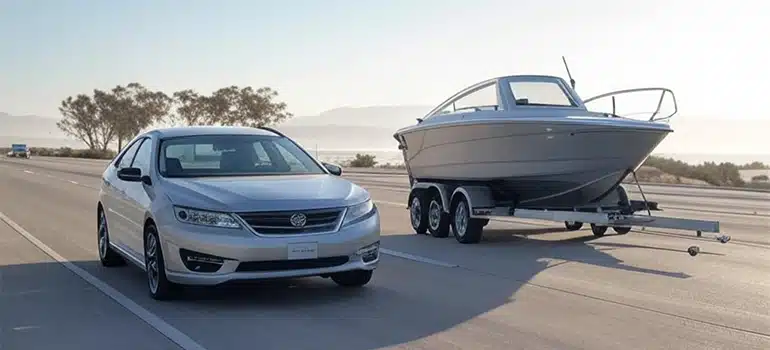
Next, flush and test the brake system. If your trailer dipped into saltwater at Dana Point, the brakes might be corroded. Brake failures on the 73 toll road or the 5 freeway are a nightmare—resulting in tow bills over $500 and possible fines. Inspect lights and wiring. Replace any frayed or exposed cables. Service the bearings, which costs about $200 in most OC trailer service shops. Confirm your registration is valid, and the trailer complies with California safety codes. Missing reflectors, bad brakes, or expired tags can get you fined $250 or more by CHP. Spending $500 upfront on trailer maintenance is cheap compared to the costs of roadside breakdowns in OC.
How Do You Measure Your Boat Correctly For California DOT Permits?
Expert movers in Orange County CA remind you that measuring your boat before transport is a step you can’t skip. California DOT requires permits for boats over 8 feet 6 inches wide or 14 feet high. In OC, oversize permits cost $100 to $150. Measuring wrong can lead to serious consequences. If your boat is over height and you miss a low bridge on the 55 freeway, the damage could total thousands—and you’ll be on the hook.
Use a laser tool to measure from the ground to the boat’s tallest point. Include antennas, radars, or anything extending from the T-top. Measure the width at the boat’s widest point, usually the rub rail. If your combined truck and trailer exceed 65 feet, you’ll need additional permits and may need escort vehicles. Oversize load banners, amber lights, and flags are required if you exceed the limits. These items cost around $200 if you need to buy them locally. Missing these details is an expensive mistake—fines for oversize violations can hit $1,000 or more in California.
Why Should You Drain Fuel And Hazardous Fluids Safely Before Transport?
Proficient Orange County residential movers always remind boat owners that leaking fuel or oil during transport can cause massive legal problems in OC. California law requires draining or lowering fuel to 25% or less before transport. This is especially critical if your route crosses environmentally sensitive zones like Bolsa Chica Wetlands. A small leak can trigger environmental fines starting at $500.
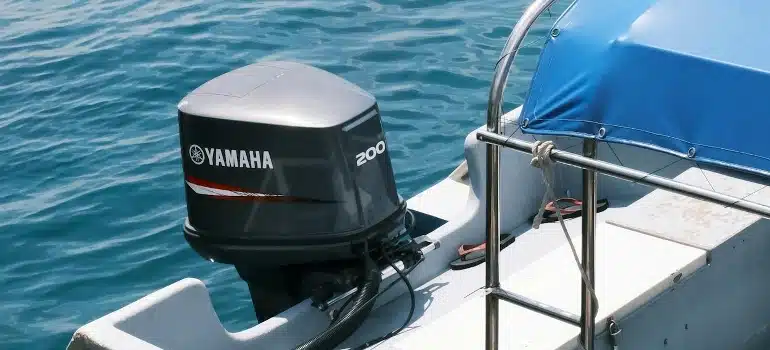
Siphon extra fuel into approved containers. Disposal at OC hazardous waste sites costs about $25. Drain and check hydraulic systems, oil reservoirs, and coolant tanks. Remove any unnecessary fluids from the bilge. Use absorbent pads to soak up residues. Inspect for leaks. If you spill even a quart of oil on an OC highway, the cleanup could cost you over $1,000. Plus, your insurance might refuse to cover it if you didn’t follow safety procedures. Always transport your boat with fluids minimized and secured to avoid accidents, spills, and fines.
How Can You Confirm Insurance Covers Boat Moves In OC?
Checking your insurance policy is a step many OC boat owners skip—and regret later. Most standard policies don’t automatically cover overland transport. Before boat moving in OC, contact your agent. Get written confirmation that your policy covers road transport, liability, and third-party damages.
If your current policy lacks this, purchase a short-term rider. These cost around $150 to $300, depending on your boat’s value and distance moved. For boats over $100,000, premiums might jump to $500. Also confirm if your policy covers road hazards, accidents from trailer failures, or spills. OC’s crowded streets make accidents likely. You don’t want to find out too late that you’re not covered if your trailer clips a car on the 405. Keep a copy of your insurance certificate in your tow vehicle. CHP or local authorities might request it if anything goes wrong on the road.
What’s The Smartest Way To Plan Your Route Across OC To Avoid Traffic And Low Clearances?
Planning the route is one of the most critical steps for boat moving in OC. Orange County’s freeways and surface streets are filled with challenges. From the tight turns near Laguna Hills to the unpredictable backups on the 91, even seasoned drivers struggle when hauling a large boat. Use apps like TruckerPath or specialized trucking GPS to avoid surprises. These tools help you spot low bridges, weight restrictions, and choke points. Never assume your usual route will work when towing a boat. Stick to oversized-approved routes provided by Caltrans. For most oversized loads, that means the I-5 and I-405 are your safest bets. Avoid streets near old industrial districts or downtown Santa Ana, where clearance dips below 14 feet.

Plan your move outside of rush hours. Between 6 AM and 9 AM, and again from 3 PM to 7 PM, OC freeways are gridlocked. Even the coast roads like PCH get jammed with tourists and locals heading to the beach. If possible, schedule your move at night, when the roads are quieter, and the air is cooler, reducing strain on your truck and trailer. Also, check local events. A surf contest in Huntington Beach or a parade in Anaheim can force detours that add hours to your trip. Having a primary route and at least one backup is smart planning. The last thing you want is to get stuck on a narrow road with no turnouts while towing a 35-foot vessel.
Why Should You Prepare The Marina Or Storage Location In Advance?
Skipping this step causes major headaches during boat moving in OC. OC marinas like Newport Dunes or Dana Point Harbor don’t accept walk-ins with oversized boats. Most require reservations for cranes, forklifts, or slip transfers. Call at least seven days before your scheduled arrival. Confirm your time slot, and check that the marina knows the size of your boat and trailer. Some docks only allow limited access hours, especially if you’re bringing a vessel over 30 feet.
Verify the depth, clearance, and dock access at your slip or dry storage space. Some slips might not have the water depth needed if you arrive during low tide. For boats delivered to private properties, confirm the driveway can handle the weight and length. In OC, HOA rules are strict. Check local bylaws to avoid fines for oversized vehicle parking violations, which can cost $150 or more per day. If the location isn’t ready, you’ll face emergency storage fees. In OC, dry stack storage runs $300 to $500 per day for last-minute bookings. That’s a painful extra cost for something that can be avoided with a few calls and measurements.

What Are The Key Steps For Preparing The Marina Or Storage Location In Advance?
Before any boat moving in OC, preparing the marina or storage site properly can save you from delays, fines, or extra storage fees. Follow these steps carefully:
- Contact the marina or storage facility at least seven days before your scheduled arrival to confirm your time slot and services.
- Verify the boat’s dimensions and ensure the slip, dock, or storage area can handle its length, width, height, and weight.
- Check the water depth at your assigned slip, especially if you are arriving during low tide.
- Confirm crane, forklift, or hoist availability if your boat requires lifting from the trailer into the water.
- For private properties, inspect the driveway and parking area to ensure it can accommodate the boat and trailer safely.
- Review HOA or neighborhood rules to avoid fines for oversized vehicle parking or restricted delivery hours.
- Confirm gate codes, entry points, and operating hours to avoid access problems on moving day.
Keep Your Vessel Safe With Smart Boat Moving In OC Prep
Boat moving in OC demands more than a casual approach. Every detail counts when you’re towing a valuable vessel through crowded streets, past low bridges, and into tightly regulated marinas. From inspecting the hull to draining fuel and planning the route, skipping steps can lead to costly damage, legal trouble, or even accidents. Smart boat owners double-check insurance coverage, invest in professional wrapping, and take the time to clean and secure their vessel properly. Confirming marina reservations, knowing local traffic patterns, and preparing your trailer are essentials in Orange County’s complex boating scene. If you want to avoid headaches and extra costs, take the time to follow these steps carefully. For the best results, always save money by comparing moving quotes and working with local experts who know OC’s rules inside and out.